
What Fabrics Are Best for Handmade Kaftans?
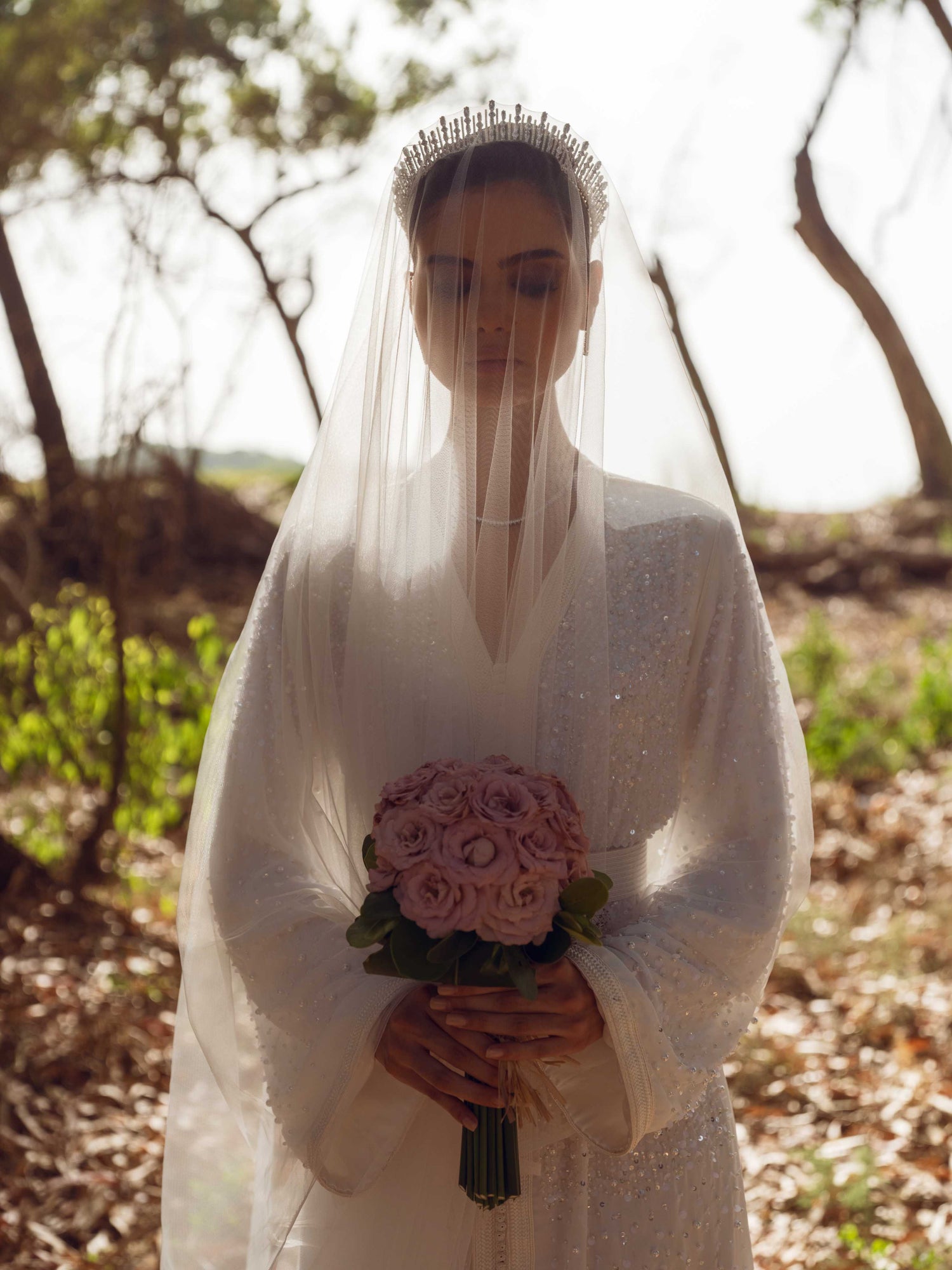
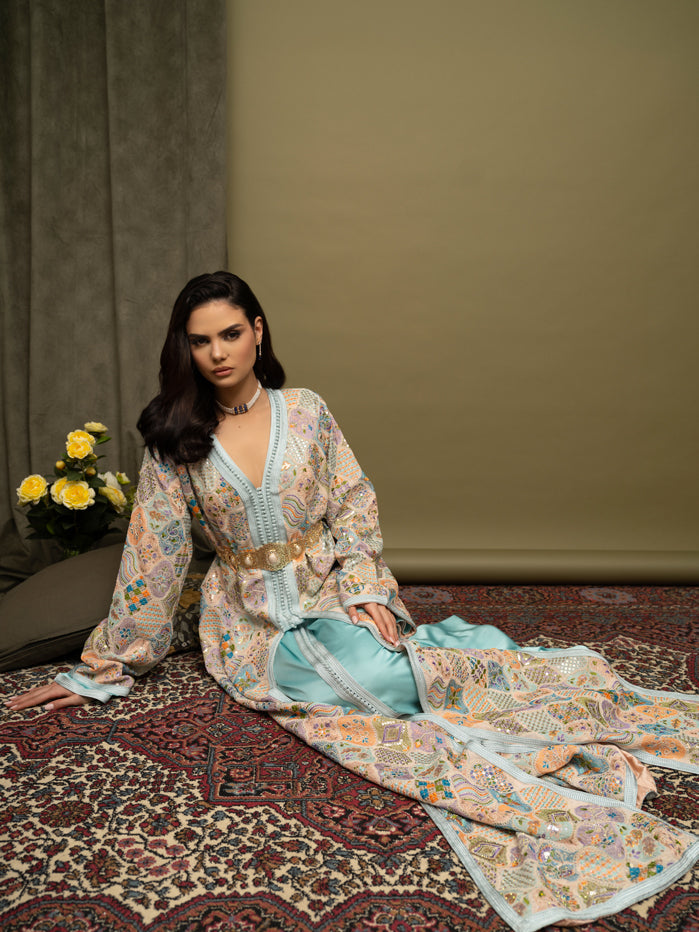
A handmade kaftan is rarely made from a single layer of fabric. It is composed of several layers that work together to give the piece its movement, its elegance and its lasting comfort. The outer layer is the most visible and the most decorated. It carries the embroidery and reveals the personality of the kaftan. Beneath it, a finer layer brings structure and softness against the skin. A delicate lining is then added to ensure the fall of the silhouette and to protect the embroidery work over time. Every layer plays its role in creating a piece that is both beautiful and pleasant to wear.
For winter, our ateliers favour fabrics that bring warmth and richness without sacrificing elegance. Silk velvet is a timeless choice, deep in tone and luxurious to the touch. It catches the light in a quiet way and elevates traditional embroideries beautifully. Heavier brocades and jacquards are also a favourite during the colder months, often woven with subtle metallic threads that recall the splendour of Moroccan craftsmanship. These materials hold the embroidery firmly and give the kaftan a sculptural presence.
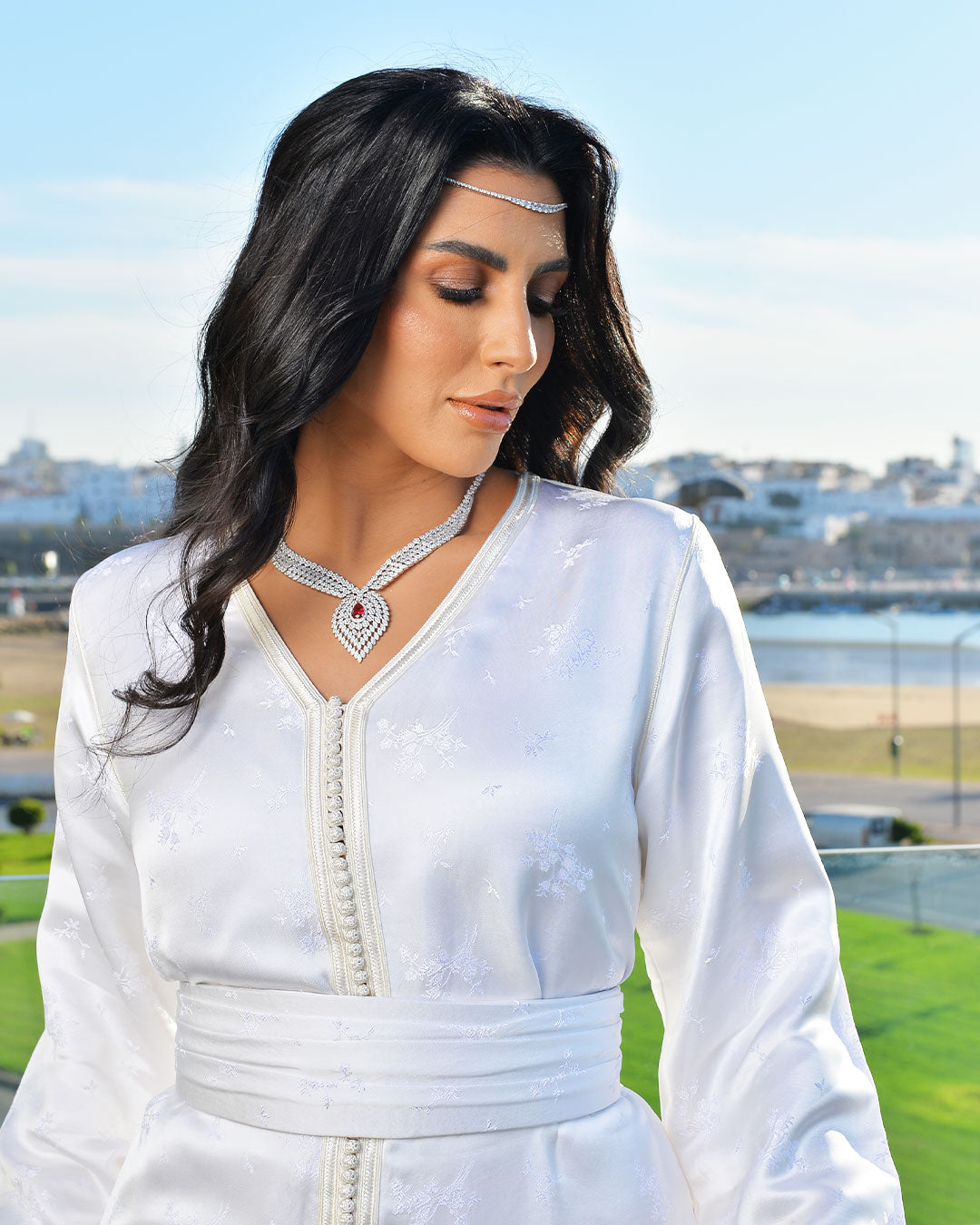
For summer, the approach is entirely different. Lightness becomes essential. Natural silks, fine mousselines and airy organzas are preferred, allowing the kaftan to flow with grace and breathe through the warmest days. Soft satins and refined crepes are also widely used, offering a luminous finish without weight. These fabrics let the body move freely and create a feeling of effortless elegance, even during long ceremonies.
Beyond the seasons, the fabric is always chosen to honour the embroidery it will carry. A heavily embroidered piece requires a strong base, while a more delicate design calls for a softer fabric that lets the work shine without overpowering the silhouette.
The fabric is never an accessory in a handmade kaftan. It is the foundation of everything that follows.
Discover our collections and our tailor made universe at daralkaftan.com.